Biggest Soundlink Revolve Buying Mistakes (And How to Avoid Them)
The Bose Soundlink Revolve has remained a cornerstone of the portable Bluetooth speaker market for several years, praised for its elegant cylindrical design and immersive 360-degree sound. However, despite its reputation for quality and the premium nature of the Bose brand, many consumers find themselves regretting their purchase or feeling underwhelmed shortly after unboxing the device. This dissatisfaction rarely stems from the speaker being "bad," but rather from a series of common buying mistakes that lead to a mismatch between user expectations and the product’s specific engineering priorities.
Choosing the right audio equipment requires more than just looking at a brand name or a star rating. It involves understanding the physics of sound, the limitations of battery-powered enclosures, and the specific environment in which the gear will be used. For the Soundlink Revolve, which occupies a unique middle ground between ultra-portable clip-on speakers and large, heavy-duty party speakers, the potential for choosing the wrong tool for the job is high. This article examines the most frequent errors buyers make and provides a comprehensive guide on how to evaluate this speaker against modern alternatives.
Detailed Product Analysis: The Soundlink Revolve Philosophy
To understand why mistakes happen, one must first understand what the Soundlink Revolve is designed to do. Bose engineered this speaker with a single, highly efficient transducer positioned downward, aimed at a patented acoustic deflector. This design is what creates the "revolve" effect—sound that radiates equally in all directions without the phase issues or "dead spots" typical of traditional forward-firing speakers.
This 360-degree dispersion is the speaker’s greatest strength and its primary reason for existence. It is intended to be placed in the center of a room or a table so that everyone surrounding it receives the same frequency response. However, this design philosophy necessitates certain trade-offs. Because the energy is dispersed in all directions rather than focused forward, the Soundlink Revolve may lack the "throw" or direct punch of a traditional speaker of the same size. Understanding this architectural choice is the first step toward avoiding a buying error.
The construction is equally thoughtful, featuring a seamless aluminum housing that is both aesthetically pleasing and structurally rigid. This rigidity helps minimize internal cabinet vibrations that can muddy the mid-range frequencies. Despite its sleek appearance, it carries an IP55 rating, making it resistant to water splashes and dust. While durable, it is not "rugged" in the traditional sense; it is a premium lifestyle object that happens to be portable, rather than a ruggedized outdoor tool designed for the beach or hiking trails.
Mistake 1: Misunderstanding the "Plus" vs. Standard Model
The most frequent error occurs right at the checkout counter: failing to distinguish between the Soundlink Revolve and the Soundlink Revolve+. Many buyers choose the standard Revolve because it is more compact and slightly more affordable, only to realize later that they needed the extra volume and battery life of the Plus model. The standard Revolve is excellent for personal listening at a desk or in a small bedroom, but it can struggle to fill a large, open-concept kitchen or an outdoor patio with energetic sound.
The Revolve+ isn't just "bigger." It features a larger transducer that can move more air, resulting in significantly deeper bass response and a higher maximum SPL (Sound Pressure Level) without distortion. It also includes a flexible fabric handle, which makes a massive difference in day-to-day portability. If your primary use case involves moving the speaker from room to room or taking it outside, the lack of a handle on the standard Revolve is a design limitation that frequently leads to accidental drops.
Mistake 2: Ignoring the Evolution of Bluetooth and Charging Standards
The Soundlink Revolve has been updated over the years (specifically with the Series II), but many buyers pick up older stock or refurbished "Series I" units without realizing they are missing out on modern connectivity features. The original Revolve series relies on Micro-USB for charging, a standard that is rapidly becoming obsolete. In a world where almost every laptop, tablet, and smartphone uses USB-C, carrying a dedicated Micro-USB cable just for your speaker is a significant inconvenience.
Discover deals on Audio & Headphones — updated daily.
Browse Now →Furthermore, the Series II offers improved battery life and better Bluetooth multi-point connectivity. Buying an older version to save a few dollars often results in "battery anxiety" or frustration when trying to switch between a laptop and a phone. Always verify the series number before purchasing to ensure you are getting the most refined version of the hardware.
Mistake 3: Treating It Like a Party Speaker
A common misconception is that because a Bose speaker is "expensive," it must be "loud." While the Soundlink Revolve can certainly get loud enough for a dinner party or a small gathering, it is not a "party speaker" in the vein of larger, woofer-heavy units. The DSP (Digital Signal Processing) in Bose products is designed to prevent distortion at high volumes, which it does by aggressively rolling off the bass as you approach maximum volume. This means that at 90% volume, the speaker can sound thin and mid-forward.
Buyers who expect window-shaking bass at high volumes will be disappointed. The Revolve is tuned for "fidelity and balance." It excels at low to moderate volumes where the "Bose sound"—characterized by clear vocals and a warm, pleasant low-end—can truly shine. If your goal is to host a backyard barbecue with twenty people, you are likely making a mistake by choosing the Revolve over a larger, more powerful alternative.
Pros and Cons
- Pro: True 360-Degree Sound – Unlike speakers that claim omnidirectional sound but actually just have drivers pointing in two directions, the Revolve’s acoustic deflector creates a genuinely uniform soundstage.
- Pro: Premium Build Quality – The seamless aluminum body feels incredibly high-end compared to the plastic and rubber finishes of many competitors.
- Pro: Simple Controls – The top-mounted buttons are tactile and intuitive, allowing for easy playback control without needing to unlock a smartphone.
- Pro: Threaded Tripod Mount – A unique feature that allows the speaker to be mounted on a tripod, raising it to ear level for better sound projection in outdoor settings.
- Con: Micro-USB on Older Models – The continued presence of Micro-USB in the Series I units is a major drawback for modern users.
- Con: Expensive Accessories – The optional charging cradle is almost essential for convenience, but it is sold separately and adds to the total cost.
- Con: Passive Bass – While the bass is clear, it lacks the visceral impact found in speakers with dedicated active subwoofers.
Mistake 4: Disregarding Placement and Room Acoustics
Because the Revolve is advertised as a 360-degree speaker, many users assume they can place it anywhere. This is a mistake. Surface boundary interference plays a massive role in how this speaker performs. If you place the Revolve in the middle of a large room on a glass table, it will sound clear but potentially "bright" or thin. However, if you place it about six inches away from a wall, the sound reflecting off the wall will reinforce the low-end frequencies, giving the speaker much more body and warmth.
Conversely, placing it deep into a corner can lead to "boomy" or muddy sound as the bass frequencies are over-emphasized. Buyers who don't experiment with placement often find themselves thinking the speaker has poor sound quality, when in reality, they aren't utilizing the environment to support the speaker's physical design.
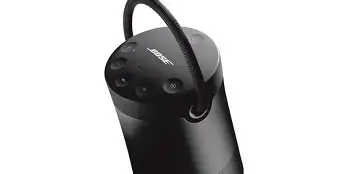
Comparison Table: Revolve vs. Revolve+ vs. Competitor Specs
| Feature | Soundlink Revolve (Series II) | Soundlink Revolve+ (Series II) | Typical Rugged Competitor |
|---|---|---|---|
| Weight | 1.5 lbs | 2.0 lbs | 1.8 - 2.5 lbs |
| Battery Life | Up to 13 Hours | Up to 17 Hours | 12 - 20 Hours |
| Sound Pattern | True 360 Degree | True 360 Degree | Directional / Dual-Sided |
| Durability | IP55 (Dust/Water) | IP55 (Dust/Water) | IP67 (Submersible) |
| Charging | USB-C (Series II) | USB-C (Series II) | USB-C |
| Internal Handle | No | Yes (Fabric) | Often Yes |
Mistake 5: Failing to Use the Bose Connect App Properly
Many buyers ignore the Bose Connect app entirely, treating the Revolve as a simple "plug and play" device. While it works that way, you are missing out on "Party Mode" and "Stereo Mode." If you find that one Revolve isn't quite enough for your space, a second unit can be paired to provide a true left/right stereo image. This transforms the listening experience from "background music" to "active listening."
The app also handles firmware updates. Many early bugs involving Bluetooth connectivity or battery reporting have been fixed via software. A buyer who never updates their speaker may struggle with issues that were resolved years ago, leading to unnecessary frustration and a negative perception of the brand.
The Buying Guide: How to Determine If It’s Right for You
Before purchasing a Soundlink Revolve, you should ask yourself several questions to ensure it aligns with your lifestyle and audio preferences. This guide helps categorize users into "Perfect Fit" or "Better Off Elsewhere."
Shop the latest Audio & Headphones picks on Amazon.
See Deals →Consider Your Environment
If you plan to use the speaker primarily indoors—on a kitchen island, a bedside table, or in a home office—the Revolve is a fantastic choice. Its 360-degree sound excels in these "centralized" locations. However, if you are a frequent traveler who needs something to throw into a cramped backpack or take to a sandy beach, the Revolve’s aluminum body and relatively open grilles make it susceptible to cosmetic damage and debris infiltration. In those cases, a fabric-wrapped, fully waterproof speaker might be a safer investment.
Evaluate Your Volume Needs
For quiet, atmospheric listening, the Revolve is nearly unbeatable in its size class. It maintains a very pleasing tonal balance even at "whisper" volumes. If you often find yourself maxing out the volume on your current devices just to hear them, you should skip the standard Revolve and go straight for the Revolve+. The extra headroom is essential for maintaining sound quality at higher decibel levels.
Voice Assistant Integration
While the Revolve has a multi-function button that can trigger your phone’s Siri or Google Assistant, it is not a "Smart Speaker" in the way an Echo or Nest device is. It does not have built-in Wi-Fi and does not listen for a "wake word." Buyers who mistake this for a smart speaker often find the process of holding down a button to talk to their phone cumbersome. If you want a voice-activated home hub, Bose offers separate "Smart Speaker" models that are better suited for that task.
The Refurbished Trap
Because Bose products hold their value well, the "Renewed" or refurbished market is very active. While this is a great way to save money, it is where most "Series I vs. Series II" mistakes happen. Ensure you are getting the updated battery and USB-C port if you are paying anything close to the retail price. A refurbished Series I unit is only a good deal if it is priced significantly lower than the current generation, as you are sacrificing several years of battery chemistry health and modern charging convenience.
Conclusion
The Bose Soundlink Revolve is a masterclass in acoustic engineering for the "lifestyle" listener. It offers a combination of sleek aesthetics and atmospheric sound that few competitors can match. Avoiding common buying mistakes simply comes down to understanding that this is a precision instrument designed for specific scenarios. By choosing the correct size (Revolve vs. Plus), ensuring you have the latest hardware series, and understanding the physical requirements of 360-degree sound placement, you can ensure that your investment provides years of high-quality audio enjoyment.
The "biggest mistake" isn't buying the speaker itself, but buying it with the wrong expectations. It isn't a ruggedized brick for an off-road adventure, nor is it a massive tower for a college house party. It is a sophisticated, beautifully built device for those who appreciate seeing the same craftsmanship in their audio gear that they expect from their home décor. When used correctly—placed strategically in a room and updated with the latest software—it remains one of the most satisfying portable audio experiences on the market today.